

Summer invites us to spend time outdoors, paying attention to the natural world around us. The sun is shining, the birds are chirping and the bees are buzzing. For those curious about the creatures that come out in these warmer months, it’s about time you got the talk. These are two Guelph-based organizations taking care of things with wings: Wild Ontario and the Honey Bee Research Centre.
Wild Ontario
Based out of the University of Guelph, Wild Ontario is an environmental education program that teaches people about native species and conservation. They care for 12 non-releasable raptors who are either physically injured or rely on humans to survive.
Co-op student Amanda Ayres described Wild Ontario as a “final destination” for birds in need of rehabilitation.
“Usually, someone finds a bird that’s either injured, or they’re doing something that a wild bird shouldn’t be doing, and they call their local rehabilitation centre and those people will go out and they’ll check it out,” Ayres said. “They’ll bring the bird in…if they’re able to heal in a way that doesn’t cause them pain, but they still have an injury that won’t allow them to live out in the wild, that’s when they become a candidate for our program.”
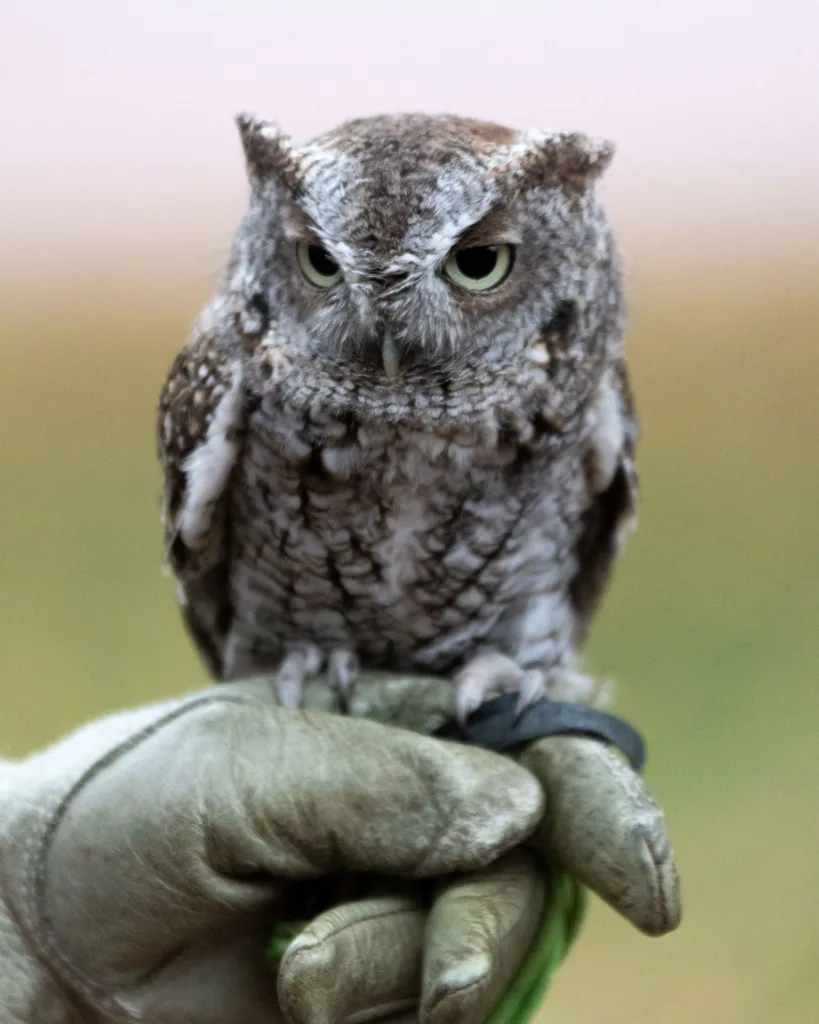
For example, the tiny northern saw-whet owl Atwood was found with a wing injury, presumed to be caused by a collision or an attack by an outdoor cat. She was unable to fly and came into Wild Ontario’s care. Now, she’s a “program star,” Ayres said.
Another reason birds come to Wild Ontario is because they are human-imprinted, like their turkey vulture Grimsby. Turkey vultures are normally nervous around people, but Grimsby was caught flying at people in their backyard.
“We think that someone was leaving food out for her, or maybe took her from the wild as a young bird,” Ayres said. “So she associates herself with humans, she expects to get food from humans…she doesn’t know how to find food on her own.”
Wild Ontario specifically focuses on raptors, which are birds of prey that hunt with their strong talons. Ayres described that they have eight different species of falcons, owls and hawks, as well as the turkey vulture Grimsby, an “honorary raptor.”
“They eat things that are already dead, like carrion, so they don’t have to hunt their food,” Ayres said.
Ayres considers turkey vultures especially interesting as their stomachs are strong enough to eat meat containing botulism, E.coli, salmonella and other dangerous pathogens, completely removing them from the environment.
Apart from these birds, Wild Ontario’s team currently consists of Ayes, program director Jenn Bock, and education coordinator Sally Cheung. With such a small staff, Wild Ontario is almost entirely run by volunteers, approximately 40 U of G students in a range of programs from wildlife biology to zoology.
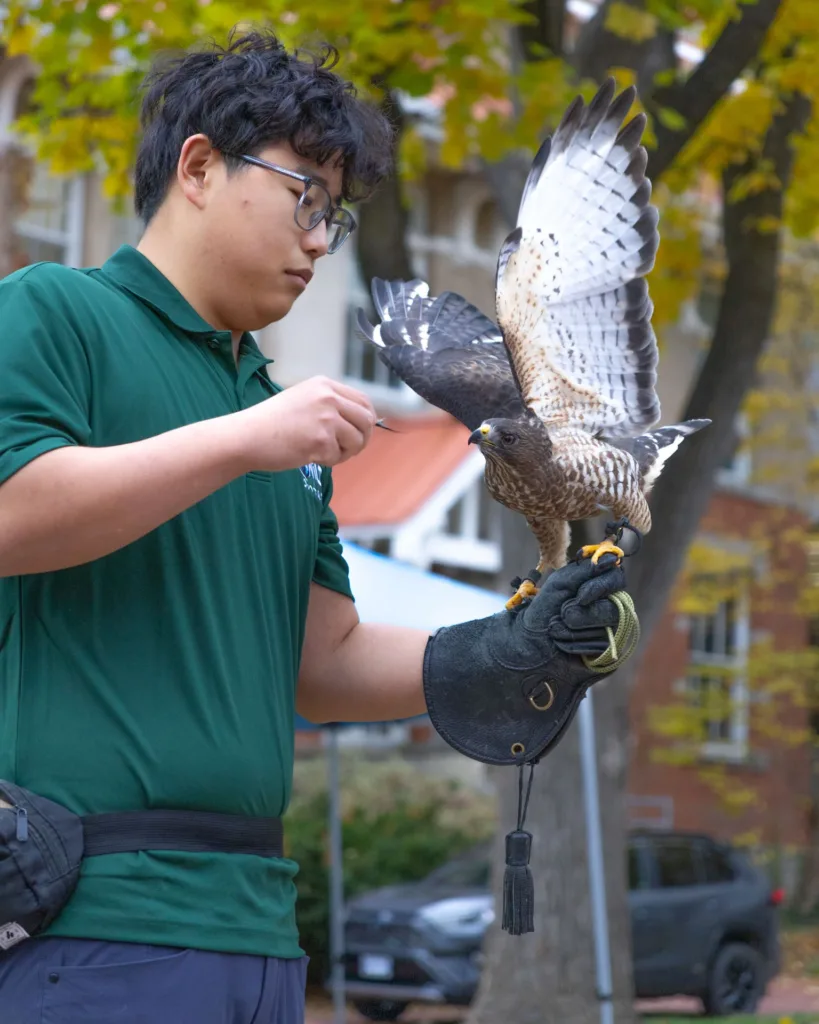
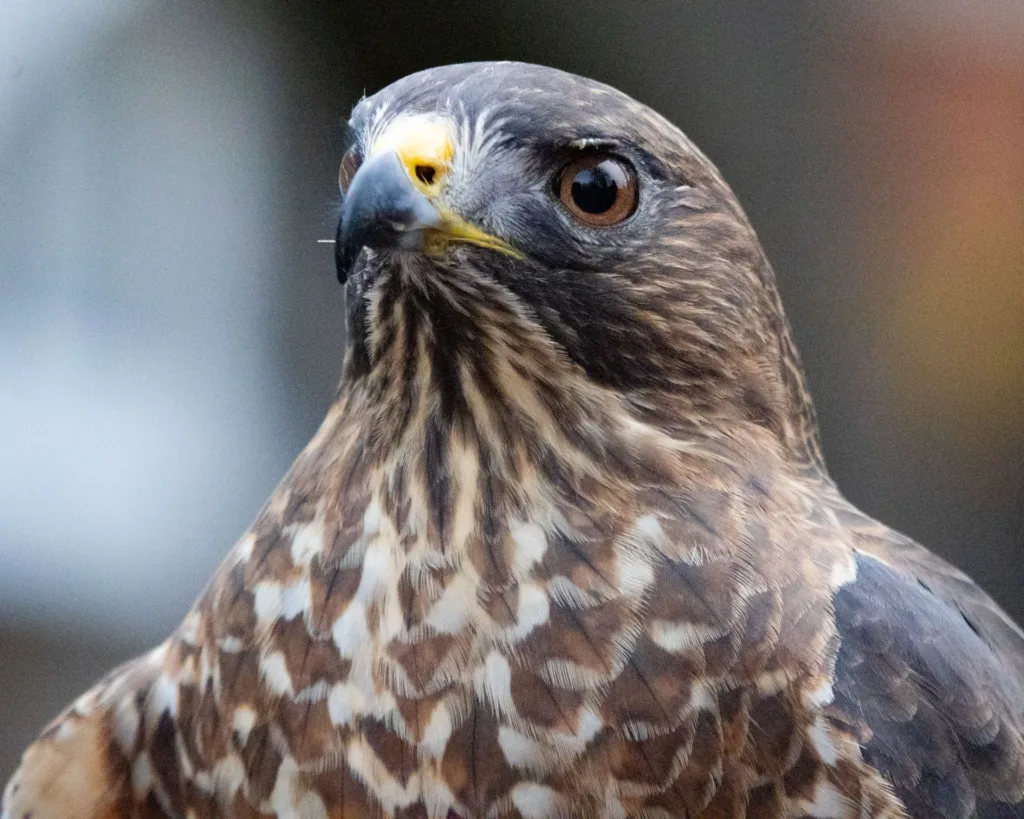
Part of Wild Ontario’s educational programming is on human-bird interaction—namely, teaching people how to prevent harm. For example, raptors like red-tailed hawks have adapted to urban spaces and hang out by taller grass near highways, where they are sometimes hit by cars.
“Roadsides are a perfect area: they have taller grass sometimes and there’s a lot of garbage,” Ayres said. “Mice, voles and squirrels go to both sides, and obviously, predators follow those.”
Ayres described that as a kid, she’d throw apple cores out the car window, believing that they’d just decompose. Later, she realized that when rodents are drawn to the fruit, raptors follow them.
“We always say that they’re not smart enough to look both ways, so they’ll just fly right across the road,” she said. “And then they’re pretty fast, so a car will just hit them, which is really unfortunate. It’s really common, and usually, it’s immediately fatal.”
She advised people to keep their garbage in the car and compost it when they get home.
Other ways to avoid harming raptors include using natural alternatives to rodenticide (as raptors eat rodents, over 60 per cent of raptors worldwide have tested positive for rodenticide in their system), and managing outdoor cats, who kill an estimated 2.5 billion birds every year, according to U of G’s One Health Institute.
Guelph has been certified by Nature Canada as a Bird-Friendly City, the criteria for which include restoring nature, mitigating key threats to birds, organizing events and municipal policies to protect birds and having residents actively engaged in admiring and monitoring local bird populations.
When asked how best to enjoy the company of birds, Ayres encouraged people to spend more time in nature.
“That leads into seeing other species and being more aware of what’s around you,” she said. “Get outside more, go to the local park or use the trails, and get more familiar with the birds that are in your area.”
The Honey Bee Research Centre
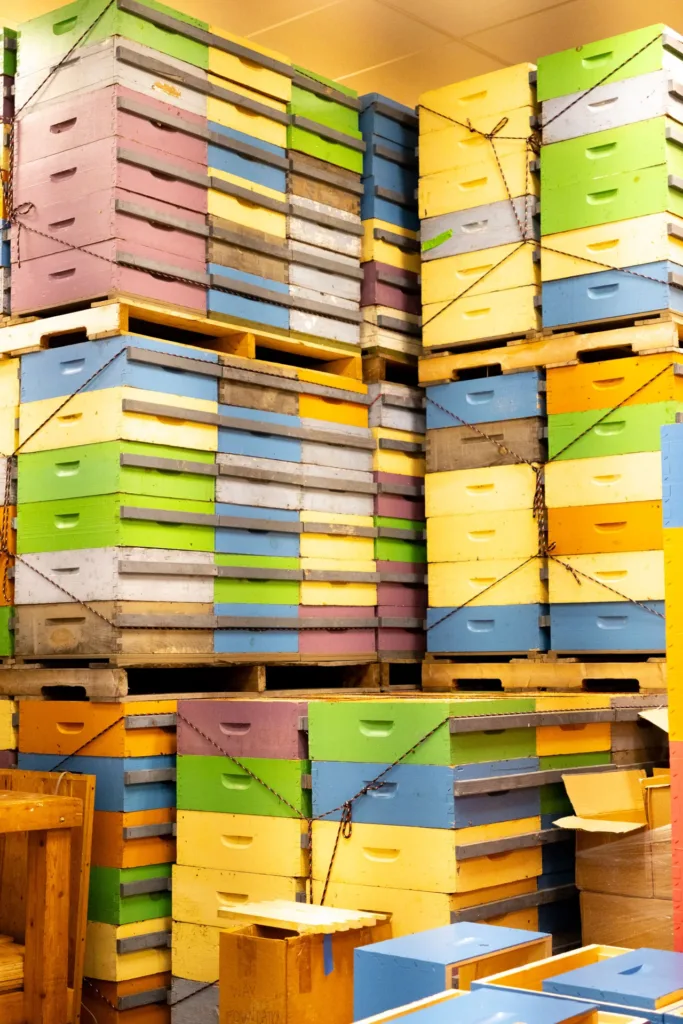
Fresh off of a move to an all-new facility, the Honey Bee Research Centre is located at 460 Stone Rd. E. Paul Kelly, the research and apiary manager, described that the centre has “a lot of things rolled into one,” including a farm, a research centre, an education centre and a retail business, as well as 300 beehives.
Roughly 800 students a year learn apiculture on campus, more than any other agricultural institute in the world. The research centre also offers public tours every day through spring, summer and early fall. For those abroad, the centre has a YouTube channel breaking beekeeping down into skills like dividing beehives or finding a queen bee.
“Our 77 videos have now been translated into 14 different languages and viewed approximately 30 million times throughout the world,” Kelly said.
As for the centre’s primary research interests, Kelly described that in the last 15 to 20 years, parasites have caused health problems for honeybees.
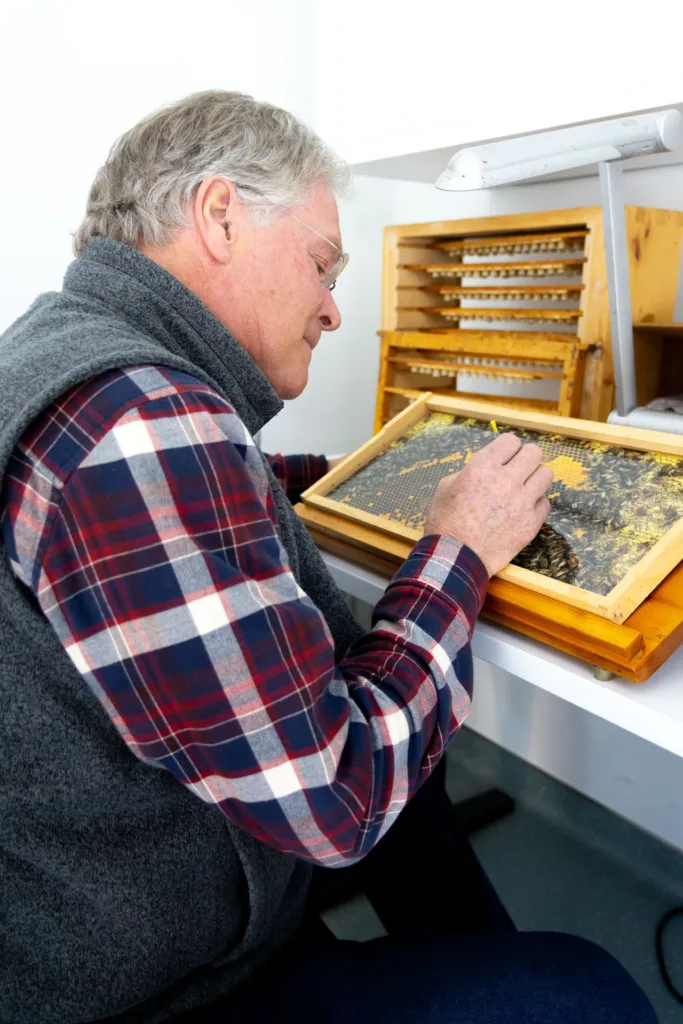
After they experienced much higher losses of colonies over the winter of 2007, the centre did a study tracking 413 colonies over a year and a half. They found that a parasitic mite called the Varroa destructor pokes a hole in the bees, causing a deadly virus.
“For us, it looks kind of small, like the size of a pin. But on a bee, it’s huge,” Kelly said. “They feed on their hemolymph, which is their blood and their protein reserves, and they also prevent that hole from being healed over, which shuts down the bee’s immune system.”
The centre’s efforts to control these mites are twofold: in the short-term, finding natural chemicals to repel the Varroa destructor while protecting the honeybees, and in the long-term, breeding for resistance.
Studying and protecting bees is imperative as they are incredibly important to our diets.
“A third of the food that we eat as humans benefits from bee pollination,” Kelly said. “80 per cent of that pollination is accomplished by honeybees, which are largely a managed species.”
Honeybees are not actually native to Canada—they evolved overseas and arrived in the 1600s. They pollinate many major crops including fruit, vegetables, nuts and seeds, and forage crops like alfalfa and clover, which are used to feed livestock.
Different bees pollinate different plants. Kelly said that native bees “stick close to home,” preferring native plants like goldenrod, aster and sumac, while honeybees will “cover a foraging range of 7000 acres.”
Furthermore, after the Ontario Agricultural College invented the pollen trap, pollen collected from honeybees has been used to feed bumblebees.
“Those bumblebees are put into greenhouses used to grow cucumbers, peppers and tomatoes,” Kelly said. “Honeybees don’t do well in greenhouses, and they can’t even pollinate a tomato plant. Bumblebees grab the tomato flower and they shake it, it’s called buzz pollinating, and that releases the pollen.”
Before that, people pollinated plants by hand, which was much less efficient.
When asked what people can do to make a bee’s life easier, Kelly mentioned several conservation efforts, including getting involved in horticultural groups. A variety of plants is important: Pollinator gardens look nice and benefit native bees, whereas trees like maple trees bloom every year for 150 to 200 years, providing longevity balanced with low maintenance. Additionally, not spraying herbicides on lawns lets plants like clovers sprout up voluntarily.
“Our campus is just a bee paradise,” Kelly said. “We no longer spray for weeds growing in common areas.”
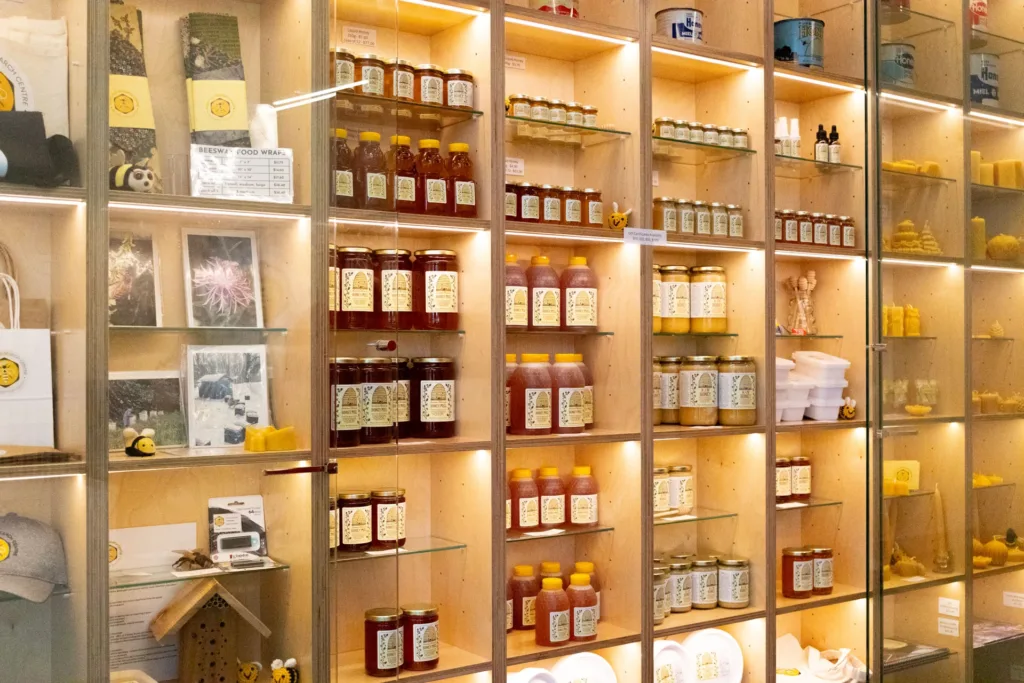
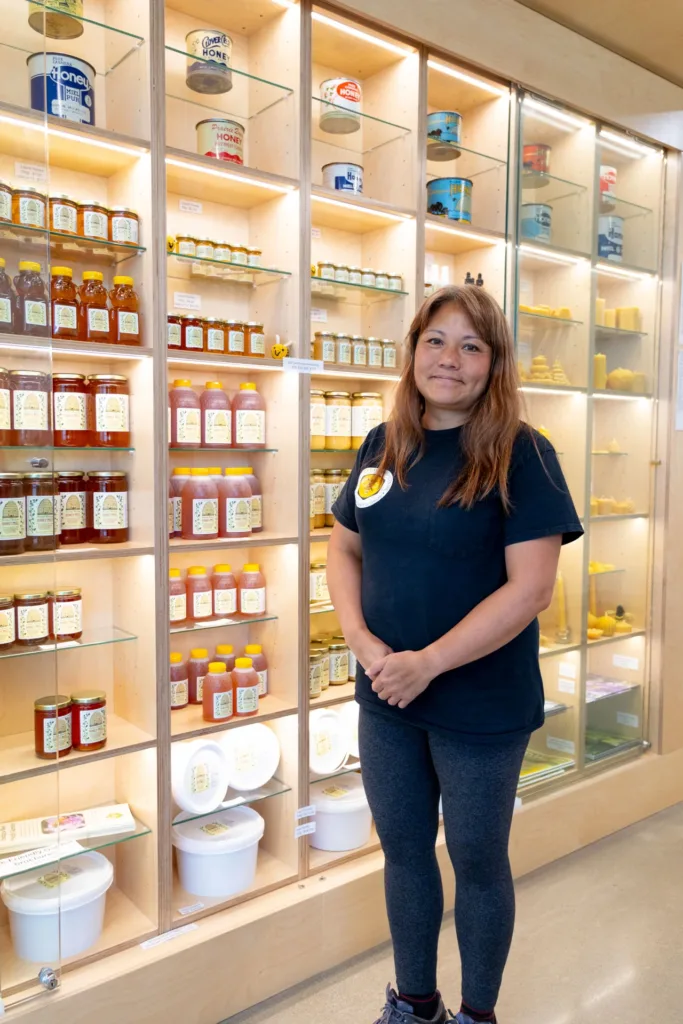
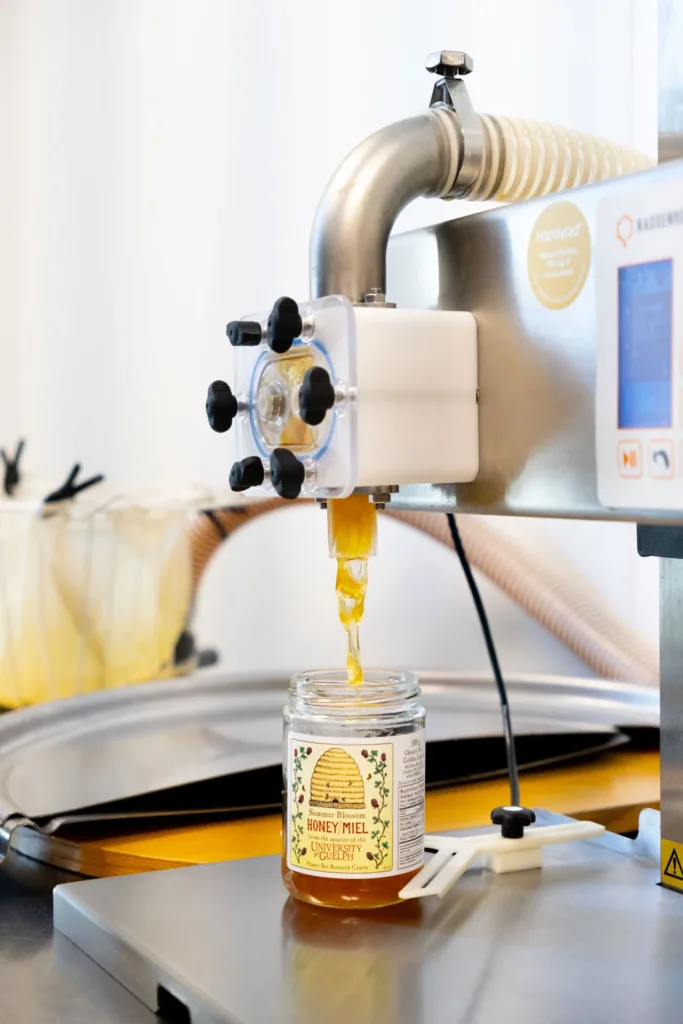
Kelly also encouraged people to support beekeepers by purchasing local honey. The Honey Bee Research Centre offers both raw and liquid honey (raw honey offers extra health benefits, like wound healing), as well as honeys from different places, producing different flavours depending on which plants were pollinated. They also have goods made from beeswax, like lip balms, food wraps and candles.
A tour of the new centre revealed a research lab, a packaging room, a beeswax station, incubators and a workshop to build specialized beekeeping equipment. A peek out of the large, sunny windows shows linden and maple trees, since the site is on a former tree nursery.
“The bees will work in the flowers and the trees, and a lot of them just happen to be beneficial trees for pollinators,” he said. “We got lucky.”