

Readers, start your engines: our queens are skilled, stunning standouts
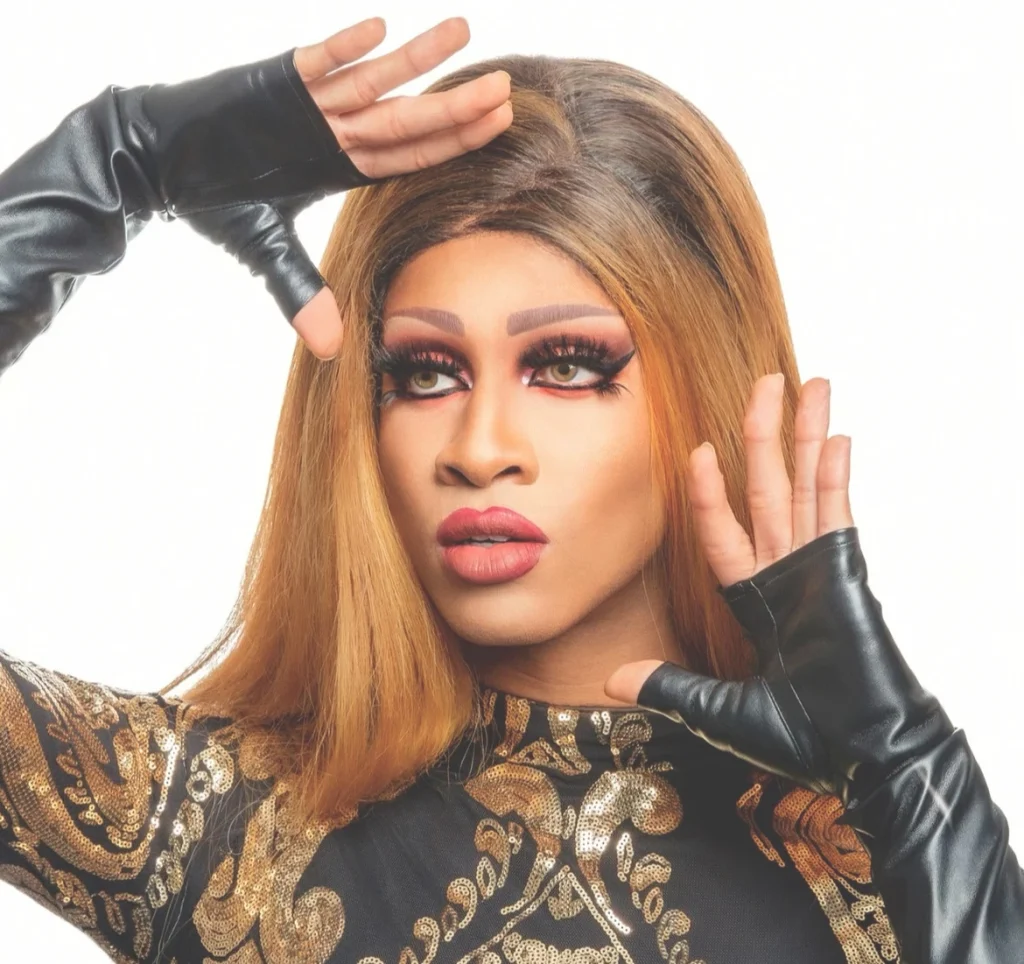
From “condragulations” to “sashay away”, millions have seen RuPaul’s Drag Race on their TVs. Here, drag is showcased as an art form that requires charisma, uniqueness, nerve, and talent.
“Drag is a culmination of all the arts,” Kamilla Flores explained. This includes the aesthetics of hairstyling, makeup, and fashion and performances that showcase dance, lip syncing, comedy, theatre and singing. Through drag, performers create a tailored persona that explores pop culture from the past to the present.
With the popularity of Drag Race, talented drag queens have become household names. Even within our own community, queer performers are killing it – Guelph has many local events that highlight drag queens and kings. Performers describe the Guelph drag scene as diverse, close-knit, and multitalented.
“We’re definitely putting ourselves on the map,” Kara Melle said.
Molly Kewl said that because different performers excel in different areas, it’s beautiful to go to local shows and see everyone’s raw talent.
“Support local,” she said. “If you like drag on TV, you should watch it in real life.”
Performers put a lot of passion into their art. Behind the rhinestones and rainbow eyeshadow, drag is a significant form of queer expression.
“It’s how we express our inner identity,” said Chimaera Kameleon.
The Ontarion met with four local drag queens to learn about the artistry behind drag and to discover each queen’s unique story.
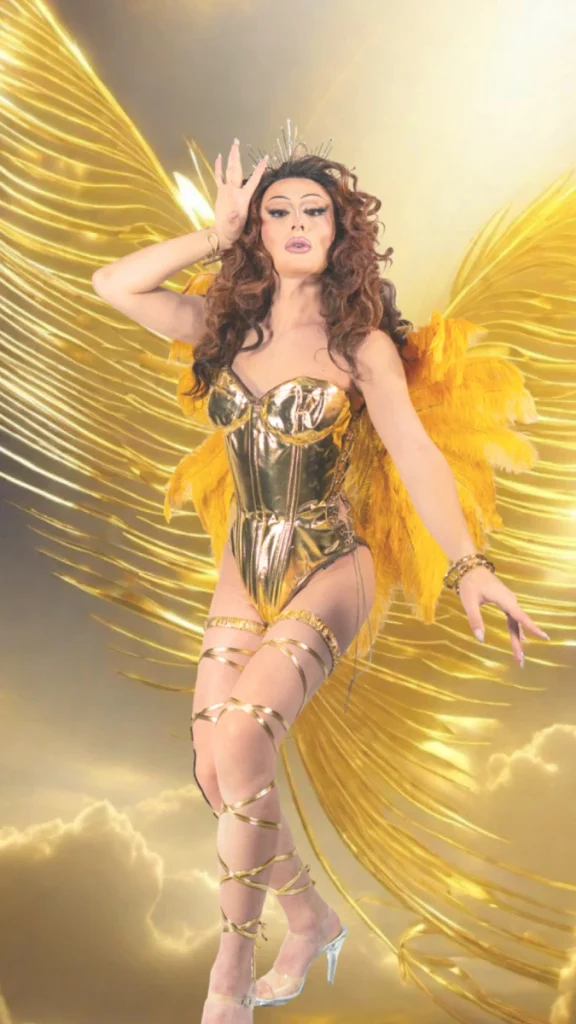
CHIMAERA KAMELEON
(IG: @itschimaera)
In only two years, Chimaera Kameleon has achieved incredible success in both drag and academia. She’s been featured on Paramount Plus’ Fellow Travelers and Netflix’s Glamorous, which stars Sex and the City’s Kim Cattrall. In shows across Canada, Kameleon stuns with lip syncs, dance, and stand-up comedy.
Kameleon described herself as a “very glamorous, high fashion, dancer diva… but also secretly a smart girl because she’s got to do business.”
As a recent U of G grad, Kameleon’s research has made significant strides in validating drag as a form of employment. Her study, completed under Prof. Thomas Sasso, recently won her an award from the Canadian Psychology Association. Kameleon presented at the conference and received her award in full drag, making her the first ever drag queen awardee.
Kameleon’s academic background can be seen in her drag name, which she found by researching an ethical dilemma in health sciences. She stumbled upon the term “chimaera,” which is like a twin who ate their other twin in the womb and now has two sets of DNA.
Kameleon chose this name to symbolise her unique drag, which embodies many things.
“People look to us to be dancers, lip synchers, comedians… anything and everything they want us to be,” she said.
But for Kameleon, drag was a way to rediscover herself and find a chosen family in the queer community.
“[Drag] is how I discovered more about myself and my journey through life,” she said.
Kameleon also described that the core of drag is queer art, and that drag provides a safe space for performers to be free to express themselves.
“With queer oppression, trauma, and marginalisation, people see drag queens as a beacon of hope and light,” she said.
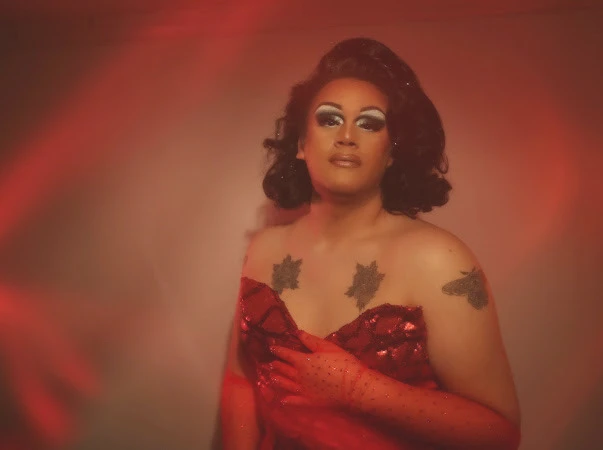
KAMILLA FLORES
(IG: @itskamillaflores)
Kamilla Flores was hooked onto RuPaul’s Drag Race. She loved to sing and dance, and drag was the perfect avenue to be artistic without sticking to just one art form. At age 18, Flores put on her co-worker’s cocktail dress and a wig and snuck into a bar near McMaster University, doing two performances.
“I felt really defeated after the first time because parking was $4 and I made $2,” she said.
Yet Flores kept performing.
Her drag name, “Kamilla,” was inspired by “badass vampire” Carmilla, a character from Netflix’s Castlevania “whose sole purpose was the destruction of men.” Then, “Flores” references her Latina heritage and flowers, which she loved to photograph in her youth.
“Kamilla Flores is a name that exudes beauty… I really stuck with that name,” Flores said. “I have a bunch of tattoos of flowers everywhere now. It really worked out.”
Five years into Flores’ career, everything has worked out amazingly. She’s developed a strong stage presence, and she loves to make jokes and interact with her audience.
But even behind the curtain, Flores’ drag has become a large part of who she is.
“Kamilla Flores, to me, is not solely a persona,” she said. “It’s also part of me. It’s the way that I interpret and view the world and it’s a way that I like to express my creativity.”
Flores described that Kamilla is a “diva” who laughs about everything, makes jokes all the time, and loves to command attention.
“Whether that makes me an attention whore or not, that’s beside the point,” she said.
Flores described that her drag is largely influenced by her Peruvian heritage, as she grew up on 90s Peruvian cartoons and old salsa music. She’s also shaped by the women in her life. Whether it was her mother or grade 12 girls that helped her navigate freshman year, Flores said, “Women inspire me more than anything.”
“Oftentimes when I didn’t have anywhere to look to, I found that primarily women were supporting me and standing by my side,” she said.
When asked about the importance of drag, Flores replied, “Drag saves lives.” She described that for those whose loved ones don’t support their sexuality, drag provides a safe space to see queens perform and meet other queer people.
“It’s somewhere to go where you don’t have to be afraid and people will respect your pronouns,” she said. “And you can dress however you want.”
KARA MELLE
(IG: @kween.karamelle)
As a visual artist, Kara Melle holds lots of respect for drag. She loved Drag Race and attended many drag shows, and she appreciated the importance of drag as a representation of Black history and as a form of queer expression.
“I saw these amazing performers… with their costumes, and the songs that they lip sync to, and just the presence that they bring to the room,” she said. “I never thought I would be able to do that.”
With encouragement from her drag mom Molly Kewl, Melle chose her drag name and began performing. An avid fan of Sailor Moon, Kara Melle initially wanted to be “Serenity,” but people said that was “too much of a stripper name.”
She liked “Kara Melle” because it resembled the Cadbury Caramilk bar, which is her favourite chocolate. She also fondly remembers getting colour matched with her friends to the foundation shade “Caramel Toffee”.
Melle describes her drag persona as a hilarious, dramatic perfectionist who “loves a gown and a long train” and is “very regal.”
“She’s a combination of all of the elegance that I’ve seen in the women in my life,” Melle said about her drag persona.
Melle is largely inspired by her mother, who consistently showed strength and brought joy to others. She admired the way her mother carried herself and thought of her as a role model.
“It was very strange because in my family … if you’re a man, you are a man’s man, you’re chopping wood or playing sports,” she said. “I related the most to my mother and wanted to be the most like her.”
Kara Melle is also inspired by incredible women of colour, including Naomi Campbell, Beyonce, and Michelle Obama.
“One of my favourite drag queens, Shea Coulee, had said that her drag is a love letter to these powerful black women,” she said. “I just hope that mine can also do something like that.”
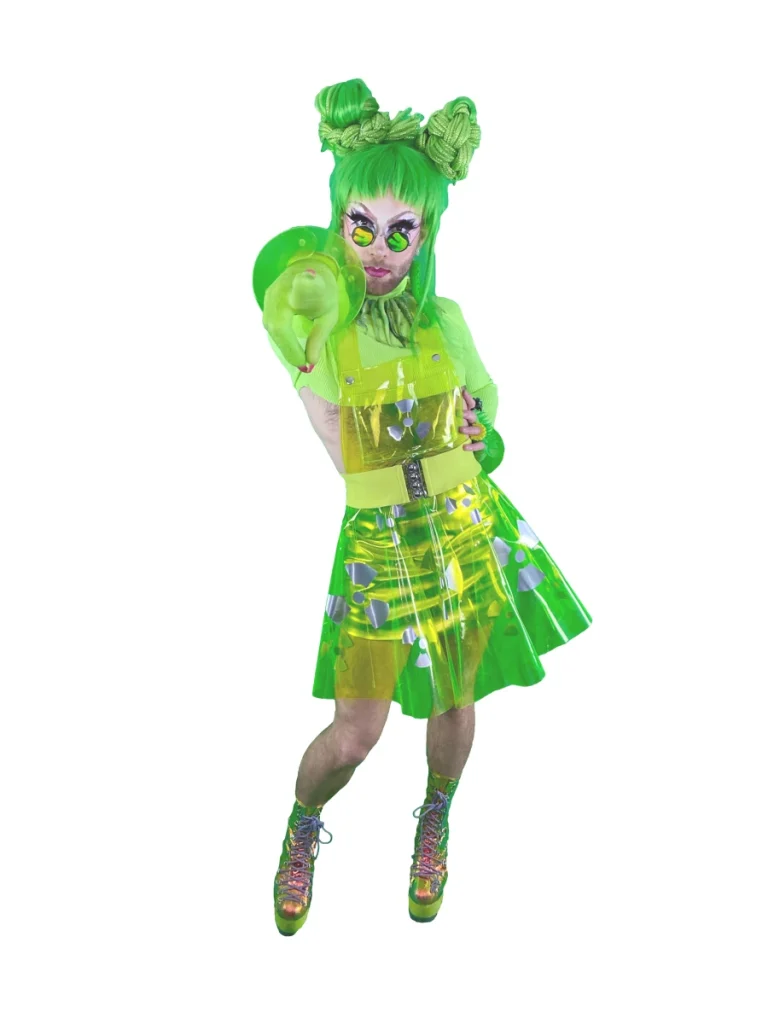
MOLLY KEWL
(IG: @molly_kewl)
Kewl, who loves music and DJing, chose a scientist name in reference to “mixing” music like potions. She described that Molly Kewl is a pun on molecule and a reference to the rave drug molly.
Kewl describes herself as “a mad scientist during the day and a raver at night,” who also loves K-pop, thrifting, and her mom.
“And, she accidentally spilled something on her and now she’s really hairy,” Kewl said.
70 per cent of the time, Kewl is a bearded queen. She seldom shaves her body and facial hair, and she describes that a lady with a beard is “not something people are used to seeing.”
However, Kewl describes that women often feel pressure to shave to fit societal expectations. As a teen, Kewl was bullied for her body hair –she would shave “everything from the eyebrows down.” But in drag, her hairiness is an inspiring political statement.
“I’ve had people come up to me after a drag show where I’m there and I’m hairy,” she said. “And they say to me, ‘Seeing you look so beautiful and be so confident helped me feel a bit better about my body hair.’”
Kewl described that with drag, she can break down gender roles and stereotypes.
“Drag is a celebration of what queer people idolize and appreciate, whether that’s femininity or masculinity,” she said. “We get to play with gender, we get to play with stereotypes, we get to break down those stereotypes.”
She explained that as a kid, she idolized powerful female figures, such as wrestlers, the Spice Girls, and superheroes.
“When you get older, and you have the means and the autonomy to basically create a hero that you needed as a child… that’s sort of what I see drag as,” she said.
Kewl describes drag as a cathartic, healing way of expression.
“The reason we got into drag is because we have so much to express,” she said. “It’s not even necessarily about attention, I was doing this stuff in my fucking bedroom… I was doing it because I just love to express myself.”
And through this expression, audiences experience queer joy and queer excellence.
Throughout her five years of drag, Kewl gained enough expertise to mother a drag daughter, Kara Melle. She advised Melle to go to open stages and competitions, and connected her with photographers, hair stylists and costume designers.
Melle is grateful to have a drag mom like Kewl, who said, “I want drag kids, but I can’t take on too many. I have my tubes tied.”
For anyone that wants to get into drag, our queens have plenty of advice for you.
“Get in contact with the people that you like, just go out to shows and be brave,” Flores said. “That’s how I got better. I kept practising, and I kept going at it.”
Flores also advises to stay true to yourself and recognize the value in your own performance rather than comparing it to others.
Similarly, Melle advised, “Don’t be scared if your drag doesn’t look like the drag that’s successful now.”
Initially, Melle was insecure that she couldn’t death drop, do the splits, or wear high-end outfits. But she forged her own path as a drag queen.
“Everyone has something they’re meant to do and a path that they’re supposed to take,” Melle said. “Be creative.”
Within drag and within all parts of life, it’s important to be yourself, no matter what.
So, find your passion, find a niche, find people you care about, and, as Melle said, “Don’t just throw on a dress and do My Heart Will Go On.”
“Be wild,” she said. “I want to be shocked.”