

Limit screen time and embrace meaningful content to escape the ‘attention economy’
Hello again, Gurus!
Welcome back to school, welcome back to campus and welcome back to my column! If you are new here, this column is your go-to guide for health and wellness with the aim of inspiring you to nurture your mental, physical and spiritual health.
Last year, we covered the fundamental habits of sleep, exercise and nutrition that are crucial for consistent, balanced and energized days, which lead to a fulfilling life. We then began exploring healthy hobbies that complemented our mindfulness practice to reinvigorate a purpose-driven lifestyle of ultimate enrichment.
As we continue this process and embrace the start of a new school year, I think it is important to reconnect with mindfulness before we continue to develop and explore the benefits of health-centred hobbies.
As such, this month’s focus will be on media consumption and media mindfulness—exploring what goes on in your brain with increased screen time, and how media consumption affects your mood, focus and energy levels, ending with some healthy sources of media which I call ‘motivation meals’.
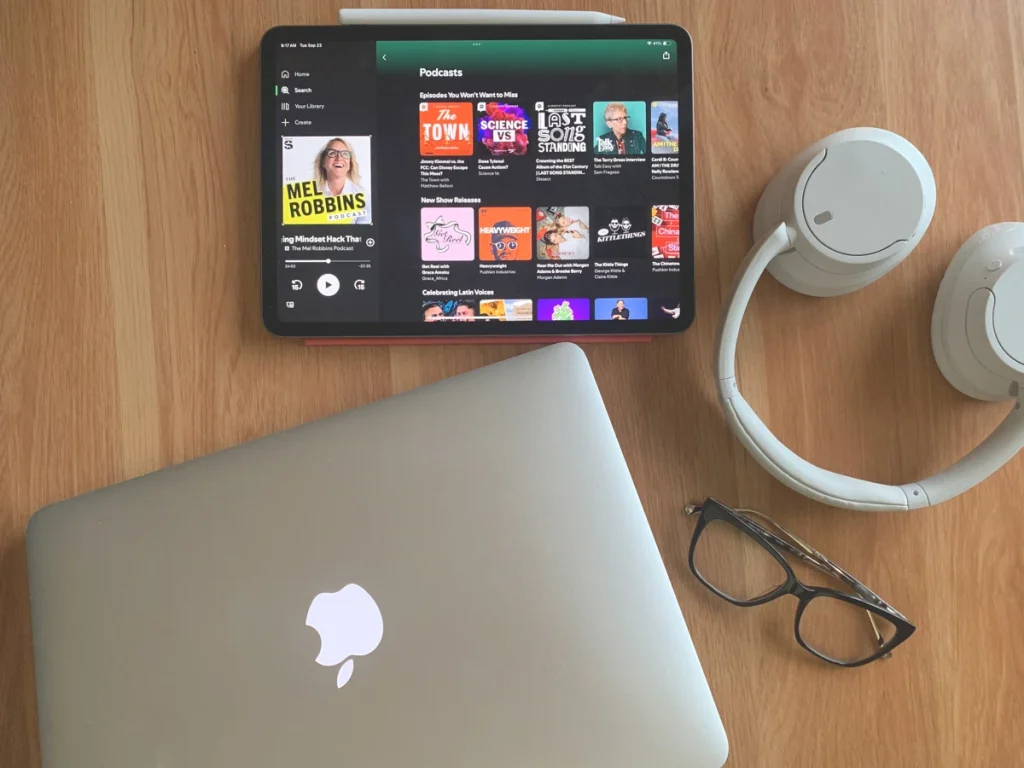
To inform this discussion, I am going to reference content from my favourite podcaster of all time, Mel Robbins. For those of you who don’t know her, she interviews world-renowned experts and provides research-backed hacks, practical wisdom and inspiring insights that remain relevant long after you’ve hit pause. She has several books, such as The Let Them Theory, The 5 Second Rule and The High 5 Habit; plus a viral TED Talk and an extensive library of podcast episodes.
The reason why I want to reference Robbins is because her podcast is part of what is known as the ‘attention economy’. The attention economy is designed to capture your attention and energy in a way where all the time you spend scrolling and watching online content actually serves big tech companies and their wallets. In fact, the more time you spend scrolling, the more money people make off of your attention and your time—something that is supposed to be inherent and innate to you.
Aside from the fact that the majority of the media we consume is filtered and fragmented reality, which contributes to our overall sense of self-worth and our worldview; constant screentime and scrolling activates the stress response in the area of the brain known as the amygdala, which drains dopamine stores with the more content we consume, leading us to be less productive as the day goes on.
Dr. Alok Kanojia describes this process as a cycle of pleasure and release that depletes the reserves responsible for deeper pleasure and motivation. Additionally, he said the “constant stimulation from the colours and moving elements on the phone creates an attention-draining effect, leaving you feeling exhausted and unmotivated for other activities, as your brain becomes conditioned to seek constant, shallow rewards.”
This phenomenon is important because it means that the content we consume is not only designed to our detriment—to keep us engaged in a toxic cycle and disconnected from the world around us—but it is also manipulative in the sense that the more we engage, the more money big tech companies acquire.
That’s why it is important that if you do choose to engage in this attention economy, which many people do, that you do so in a way that is meaningful to you and your future. Especially since “where you put your time is where your life is,” Robbins said. So, if you are going to spend seven hours a day consuming media on your phone, you might as well be consuming content that will encourage you and keep you on track.
Content I find useful is podcasts, music, and news. In terms of my favourite podcasts, I would recommend Jay Shetty’s On Purpose podcast, which provides advice, stories and ancient wisdom for building better habits, cultivating inner peace, improving one’s mindset and creating a purposeful life. He actually spent three years of his life after graduation as a monk, which I think is so cool! Alternatively, if I’m feeling like I need some bold encouragement and empowerment, I’ll turn to Kacia Ghetmiri’s EmpowerHER podcast, which feels like life advice from your best friend: raw, real and robust.
Content like this can be helpful for personal development and growth, but hours spent scrolling early in the morning and late at night are not. In fact, these times are the most damaging for subsequent productivity throughout the day and are detrimental to a good night’s sleep. Once again, this scrolling only serves to activate the amygdala, which is the brain’s stress response, leaving you feeling exhausted and unfulfilled. Why would you choose to start or end your day like that?
In order to stop this cycle, we must instill healthy boundaries like periods of no screentime for the first hour after waking and the last hour before bed. Use this buffer time instead to wake up or unwind naturally, reflect and set yourself up for success. Don’t let your phone distract and distress you. This is your time. You get to choose how you spend it.
Another way to limit screen time is by creating screen time app limits for apps you find yourself losing big chunks of the day to. For me, this would be apps like Instagram and TikTok. With daily time limits for each app, you can ensure that half the day is not wasted on scrolling. If that doesn’t work and you still find yourself drawn to your phone, try greyscaling. This will remove all colour from your screen and apps temporarily, making your screen way less colourful and engaging, enabling you to put your phone down entirely.
Overall, the goal is not to be a cellphone stickler but rather, more media conscious and present in our daily lives. These tips are just suggestions, but I hope you take them to heart and make the most of your time to connect with yourself, others and the world around you. There’s so much to discover beyond the screen!
Until next time.
Lots of love,
Jorja