
Dr. Fraser discusses his experience on the panel, and how the United Nations is addressing food security
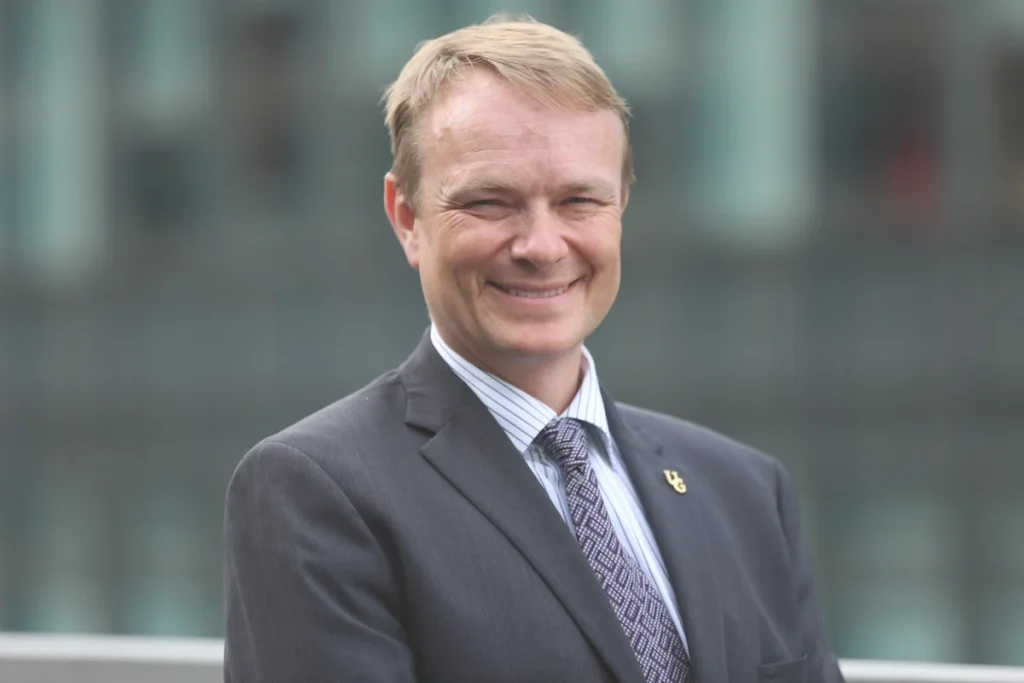
Dr. Evan Fraser was appointed as one of 15 world-renowned scientists to sit on the steering committee of the High Level Panel of Experts on Food Security and Nutrition (HLPE-FSN) for the United Nations Committee on World Food Security (CFS) late last year. The Ontarion spoke with Fraser about what his experience on this committee has been like so far.
What are the goals of the United Nations Committee on World Food Security and Nutrition?
The decision for the Committee on World Food Security and Nutrition was that there needed to be a body to advise the United Nations and develop strategies around food insecurity. So the goal is global food security at all times, for all people. The Committee on World Food Security has a secretariat, which is very small, that runs the administration. It has what’s called the “plenary,” which is where all the member state ambassadors attend, and has what they call the High Level Panel of Experts, (HLPE), which is a group of scientists that advise the secretariat and the plenary on the state of science. Sometimes it’s called the Science-Policy Interface. A lot of different disciplines have science-policy interfaces, so, like in medicine, there’s all sorts of bodies of medical scientists that advise the government on health things. This is the science-policy interface for food security for the world.
What are some of the challenges that world food security is currently facing?
Well, we live in this terrible situation where, since 2015, both the number of hungry people and the number of people struggling with chronic diseases linked with diet, obesity… things like that, are increasing. So across my whole life from well, certainly the last four decades, up until 2015, problems like obesity and diabetes were going up, but problems like hunger were coming down. In 2015 and 2016, the data shifted and hunger started rising again. So that’s really scary, right? And yet we’re producing more food…and more food per capita than we ever have before. We’re in this weird situation where there’s more food than there’s ever been before per person, and
the number of people struggling with chronic diseases linked with diet is increasing and the number of people not able to access enough calories is rising. So that’s a huge challenge.
I personally think there’s three main reasons why we’re in this situation. One is climate change, specifically in Africa, which is making it really hard for smallholder farmers to make a livelihood. Second would be conflict, specifically conflicts like Ukraine and Gaza right now, but also much of Eastern Africa and the Horn of Africa has been in terrible conflict situations for decades. And [thirdly] rising inequality. Since the 1990s, a very small percentage of the world’s population has gained an even greater percentage of the world’s wealth, while a vast number of somewhere between one and two billion people have fallen further and further behind. I think those
are the three big picture drivers which account for why we have this situation today. I don’t want to be too depressing, but I don’t think these things are going to change anytime soon. The conflicts seem to be getting worse, climate change is certainly getting worse, and every year it seems that the world becomes more inequitable.
Do you think the rising global population contributes to the issues surrounding food security?
I don’t think population is as big an issue as we sometimes think it is. At a global level, [the population] has flattened out in many parts of the world. Interestingly, if you put food production and population growth over the same period of time, food production has stayed ahead of population growth. So we say that the population has risen exponentially, which it has, but food production has risen even faster. So our ability to create better technologies, seeds, fertilizers… have kept food production comfortably ahead of population growth. So there’s more food per capita, even though there’s more people. So that’s actually a good news story, right?
There’s a sustainability argument that makes it scary. We produce a lot of food… we are very good at producing carbohydrates, particular grains, oilseeds, livestock, and we are very efficient. But we are so efficient that there’s significant sustainability and environmental problems associated with that. Just producing the stuff isn’t the problem, producing the stuff and not screwing up the planet is the problem.
How many meetings have you had so far?
I’ve had one in-person, two electronic meetings, and then lots of emails. It meets twice a year in-person, and as needed [we meet] electronically. It’s a two-year term where everyone gets appointed for two years and it’s renewable for two additional years, so it’s a four-year term.
In terms of structure and order of events, what are steering committee meetings like with the High Level Panel of Experts on Food Security and Nutrition (HLPE-FSN) of the United Nations Committee on World Food Security and Nutrition? We’ve got two ways of working. One would be that the Committee on World Food Security and Nutrition creates a Multi-Year Programme of Work, (MYPoW), every four years. So the MYPoW basically establishes themes and the secretariat and the plenary basically say to the scientists “Every year as part of the multi-year
programme of work you’re going to tackle a theme.” So the theme we’re just wrapping up from last year is urban and peri-urban food systems. This next cycle is resiliency, and then the one after that is Indigenous food systems. That’s for 2024, 2025, and 2026.
In addition to that, those big themes result in us working on fairly major reports which are formally [called] the state of the science or the state of thinking around those things. It’s a 150-page long, multi-author report with hundreds and hundreds of references and tons of recommendation reports. In addition to that, on a sort of, every six month basis as issues come up, the secretary or the plenary can say to us, “Can you write us a briefing document on something that’s topical or something that’s major?” There was one that came out about COVID,
and about the Ukraine invasion. Those are much shorter documents written within a much shorter time frame. The HLPE often turns to the plenary and says, “This is an issue we think you should write about. Is it okay if we do a briefing document on this topic?” So there seems to be those two modalities. One is the MYPoW that sets the major themes many years in advance, and then there’s the briefing documents that come up as issues arise.
So for those big documents, normally what would happen is that the HLPE as a whole would create a team of three or four people that would lead it and they would have a budget and would get experts from around the world to actually do the drafting and the writing. Then it comes back to the HLPE for scientific review.
What is your specific role in the meetings?
I’m one of those experts. So as an example, with the report on urban and peri-urban food systems, the authors wrote the first draft, and then it came to the 15 of us [on the HLPE steering committee]. We all had to read it and comment on it. Then we discussed it and then all that feedback was sent back to the writing team and they had to write a second draft. Then that second draft went out to public consultation. If the writing group and the HLPE is happy with it then that goes on a website and they invite comments from anybody in the world. In
this case, that generated a lot of feedback. Hundreds and hundreds of comments. We [the HLPE] had a whole meeting just to go through the feedback that people had sent in from all over the world. We then spent quite a while sifting through the feedback to provide the authors with distilled feedback. Then we approve the final report, and I participate in each of those steps.
On the one [MYPoW theme of] dealing with resilience, I will probably volunteer to be on the coordinating team because that’s a subject that I’ve worked on. So that’s the second specific role. The third one is that I will keep my ears open for things like emerging topics and offer to help on those emerging topics as things come up. So like a bad drought, bad climate change event, disease, or African swine flu. As those things happen, I will offer to participate in writing the briefing documents…showing up to meetings, and being available to answer any
questions.
How are you finding the experience so far?
Super excited and super frustrating at the same time. The exciting part is that there’s 15 members of the committee and the secretariat for us are such good people. The topics [are] unbelievably great topics. But the UN is a very, very big network of organizations that include multiple jurisdictions and multiple partners and figuring out how to effectively work in that highly complicated environment is hard. It’s hard for anybody. So I think the mission and the people are great, and the topics are fabulous, and working in a big complicated bureaucracy can
be frustrating… How do you get change through when there’s so many different people? There’s the Food and Agriculture Organization, and the World Food Programme, and the International Fund for Agricultural Development, and the Committee on World Food Security. So each of those are big organizations and they all have similar mandates that overlap with each other and touch base with each other.
My fundamental message is that this is exactly the right kind of work to be involved in. These are the right people, the right players, and generating change is hard. I’m not blaming or criticizing anybody for that, it’s just the reality of things. I mean, there’s nothing simple about trying to figure out a strategy to deal with climate change and food security. There’s nothing simple about that.
What have you learned and/or enjoyed so far?
Well I’ve learned a ton. I know a lot more about urban and peri-urban food systems in Africa than I did before. I mean, that’s good because that was not an area that I spent any time researching before. The one on resilience which is the next theme that’s coming up, is something as a scientist that I’ve studied a lot. So I’m not expecting to learn as much, but be able to offer more on that one. So I’m learning a lot about the subjects that I’m not as familiar with, and secondly, I’m learning a lot about how the United Nations operates which is really
interesting. The thing I’ve enjoyed the most are these 15 people who are part of the panel. They are really interesting and really, really cool people. They’ve done a lot and they’ve got tremendous expertise. So from just a personal perspective, being able to make new friends and colleagues with 15 really interesting people who all come from different countries. Fifteen people, 15 countries. That’s pretty cool. I came away from my first meeting in the fall, just purely excited by the human side of things.
When is the next meeting, and where will it be held?
Once a year the meeting is in Rome, which is where… the Food and Agriculture Organization headquarters is. The spring meeting [the next one] is somewhere else in the world where perhaps a member of the panel sits, so we’re going to Istanbul in Turkey in April.
Is there anything else you’d like to add?
I’d just conclude with what a great honor and opportunity this is. This is policymaking at the highest level in the world and being able to participate in that with this quality of people is remarkable. The fact that we’re at a very important point in world history, I think, in terms of developing food systems, which can sustain nine billion people, address climate change, provide equity and good nutrition… I think these are some of the defining questions for this generation. So it’s exciting. No matter how hard the work is, or how frustrating it might be at times, this is the right thing to be doing.