

A vigil was held for the kidnapping victims after the area was taped off
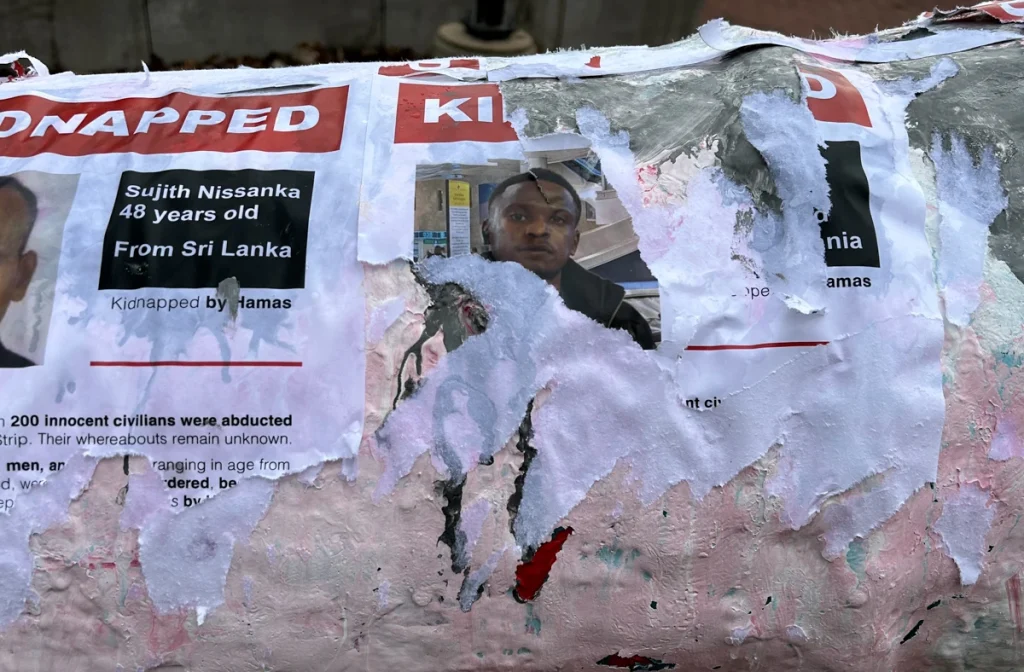
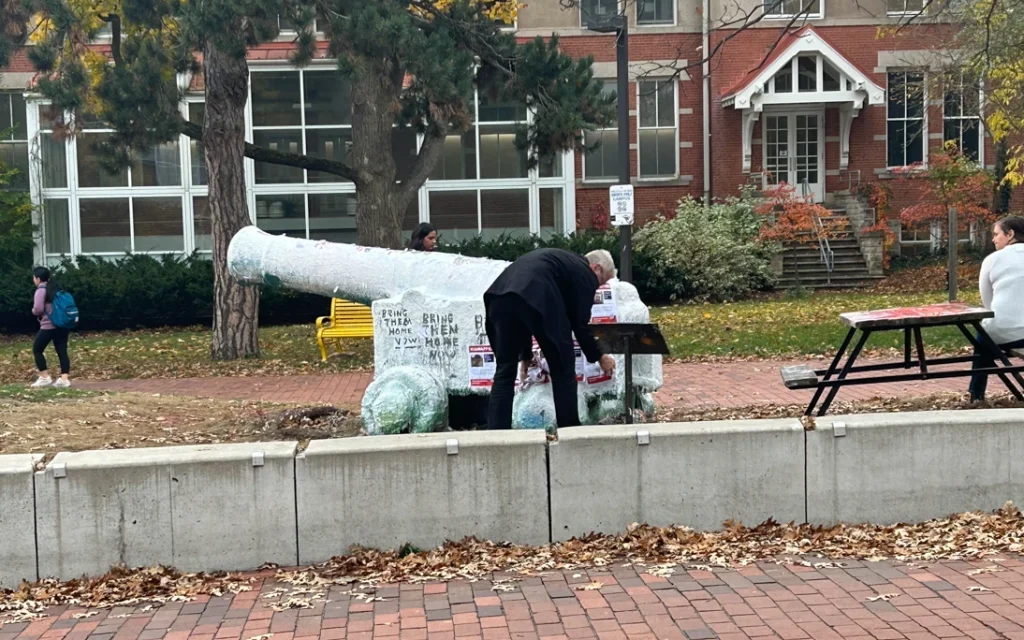
On Oct. 27, at 12:10 p.m. posters attached to the cannon were taken down by campus employees. The night before, the cannon was painted by members of the campus Jewish community, who affixed posters of people who were kidnapped from Israel during the Oct. 7 attacks perpetrated by Hamas.
A Physical Resources employee and a Campus Safety Officer had already been on the scene for several hours.
After the posters were removed, Physical Resources erected a caution tape barrier to block off the area immediately surrounding the cannon.
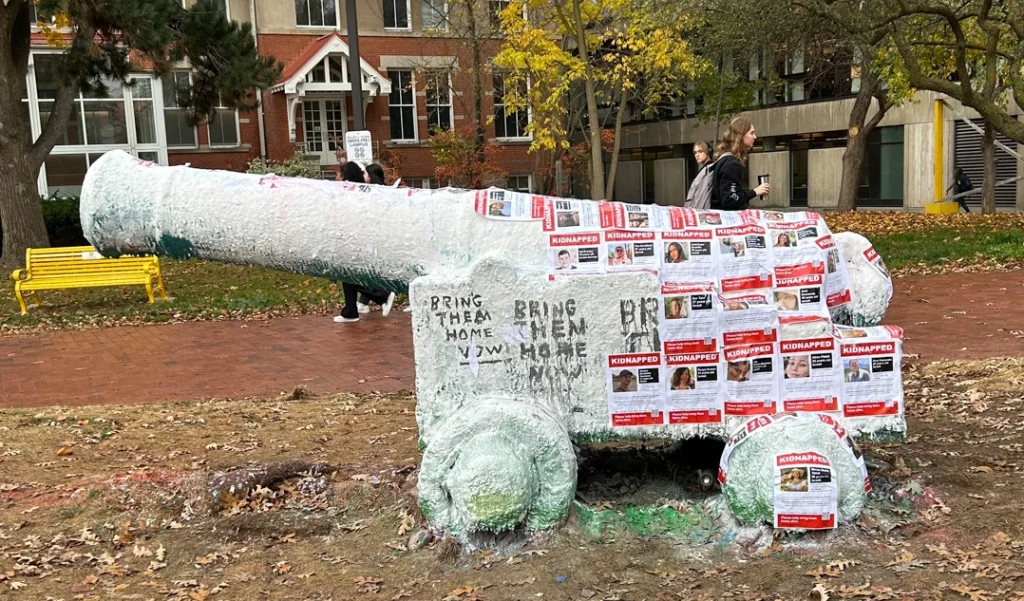
“We anticipated the potential removal,” said Daniel Spinner, member of the Alpha Epsilon Pi fraternity, one of the groups whose members were involved with painting the cannon.
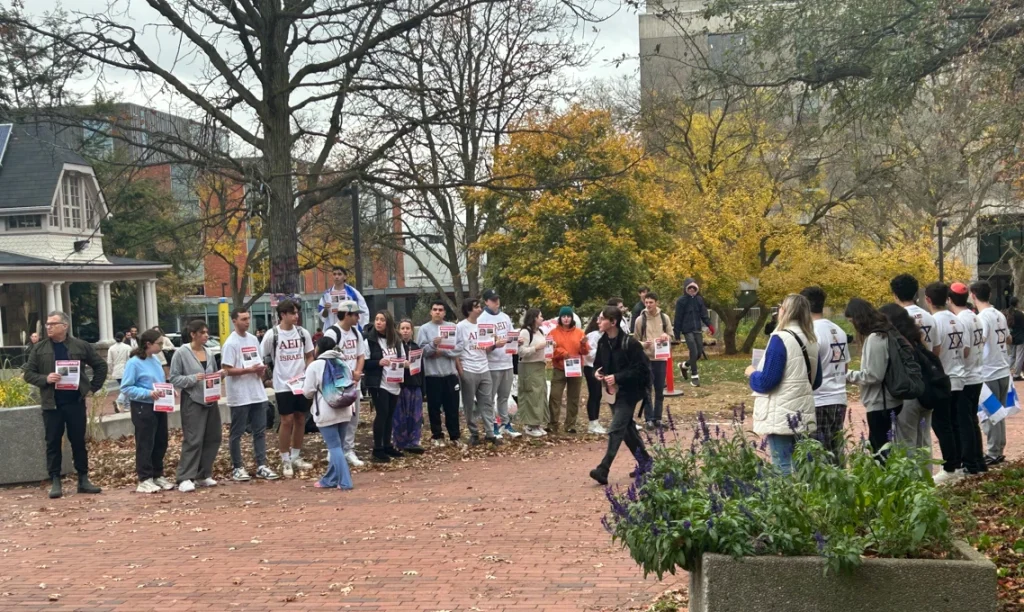
By 12:30 p.m. a group of Jewish students arrived to hold a vigil.
“We came prepared with posters for people to hold, knowing that they couldn’t be taken down from our hands,” said Spinner, in an email. “We opted for a quiet vigil as our gathering [as] our focus was on creating an environment conducive to fostering meaningful and respectful dialogue while ensuring the vigil remains respectful.”
Spinner explained that the vigil was to raise awareness for the men, women and children kidnapped by Hamas.
He also said that the university didn’t get involved until a student started taking down the posters.
“It was students who initiated the removal,” he said. “The university’s involvement occurred only after half the posters were taken down.”
The Ontarion reached out to the University of Guelph with specific questions:
Which University of Guelph policies were referenced in the decision to remove the posters?
In what way did the posters meet the threshold for removal in the context of the policies?
How does the university administration determine which messaging should be removed and which should remain up? What considerations are taken into account?
“The decision was made based on the University’s policy on campus advertising promotion sales and solicitations.” said Deirdre Healey, Interim Associate Vice-President, Communications & Marketing.
“This policy indicates that all posters and bulletins placed on University property must be approved and displayed only on pre-authorized designated boards.”
“All posters and bulletins placed on University property must be approved by the Solicitations Committee or the appropriate designated organization such as Student Housing Services, University Centre Administration, and Central Student Association, and displayed only on pre-authorized designated boards,” reads the piece of policy.
Spinner said this decision and the reasoning behind it confused him.
“Campus Police gave us vague justification that the posters didn’t have the university’s approval, even though they were solely attached to the cannon which we found confusing as we have seen other items affixed to the cannon in the past – like grass mats,” he said in the email.
Spinner said applying the rules for solicitation and advertising to the cannon contradicts its purpose.
“In my two years here, I haven’t seen any messages removed from the cannon, making it feel like an attempt to silence us, even if that was not the intention,” he said. “We felt that it wasn’t handled with the required sensitivity and respect that it deserved given the subject matter of it being human lives at risk.”
He said the incident raises concern for free speech on campus.
“The selective enforcement of rules on the cannon suggests a potential bias, making us feel that certain perspectives are being stifled,” Spinner wrote. “The fact that campus police might not have intervened for different content raises questions about equal treatment of diverse opinions and the protection of free speech rights.”
For Spinner, this is a matter of standing up for what is right – even if he feels the messaging is silenced.
“No one else would speak up or act on behalf of us, it became imperative for the broader community to stand together and express unwavering support for the families of the hostages,” he said.
This is not the first time the Cannon has been the centre of speech-related controversy. In November 2019 members of the Hong Kong Student Radio Association, a campus club, had painted the Cannon with phrases such as “Free Hong Kong”, which were later removed by other students who disagreed with the messaging.
Students interested in painting the cannon can find more information at uoguelph.ca/studentexperience/painting-the-cannon.